How to Market Medical Devices to Increase Revenue

Raise your hand if you’ve ever needed one of the following: general surgery, minimally invasive surgery, diagnostic imaging, wound management, diabetes care, or a device related to dental, ophthalmic, cardiovascular, or orthopedic care. By the time we hit that midlife stride, it’s more than likely we’ve acquired glasses, had an x-ray, or gotten a broken bone repaired. Cause our bodies kind of take a beating.

These broad, sweeping categories are all part of the medical device market, and it’s a freaking beast of an industry. Growth of this market is expected to reach $657.98 billion by 2028, up from $455.34 billion in 2021. That prediction means that more and more people will be relying on healthcare systems, making the conditions ideal for medical marketing designed to increase revenue. But with more competition than ever trying to get a piece of the pie, you’ll need to up your game in order to stand out from the crowd. Here are the top strategies for medical device marketing.


Expand Your Reach with SEO

First things first: your SEO MUST be optimized before anything working on anything else. Creating a strategy to reach your target audience will include everything from speeding up page loading times to implementing voice searches. Google knows people are scouring the internet looking for information and answers, so you need to play nice with the search engine and play into the algorithm with medical marketing best practices. Optimizing SEO through key words and phrases will help boost your website’s traffic and capture more leads. 


Focus on Your Buyers

Once your target audience has found your SEO-optimized website, they need to understand what you’re offering and why it’s unique/awesome/perfect for them. Your market research must determine not only who your buyers are, but also what they need, why they need it, and when it needs to be ready. And then your website design should cater to each of those needs. Creating buyer personas will help you figure out how to attract prospective buyers, as well as retain current clients. Help make the buyer experience a positive one by curating medical marketing content that directly addresses their demographics, habits, and pain points. 

Utilize Different Channels

Directing buyers to your website is a solid first step, but it’s not the only way they are going to find you. Utilizing a variety of channels in your medical device marketing helps provide a more diverse portfolio, thereby widening your reach. Some of the best ways to help increase revenue include having active social media platforms, regular blog posts, and opting for some paid media advertising. Depending on what types of medical devices you are trying to market, these efforts could include options like pay-per-click ads, YouTube videos, online FAQs, and even TikTok influencers

Create and Maintain Industry Relationships

Ok, your target audience has found you, they like what they see, and they are ready to buy. So your work is done? Not quite. Buyers can be fickle, and loyalty doesn’t always have a place in business. Your branding needs to be valuable and relevant in order to prevent customers from jumping ship and swimming to a competitor. Once an industry relationship has been established, maintain it through:


  • Frequent communication
  • Quality control and improvement
  • Anticipating future needs
  • Creating buyer profiles 
  • Remaining visible and available 


Nurture Leads with the Right Marketing

The goal of all these medical device marketing steps is to generate leads and then nurture them, because leads turn into customers. Think of lead nurturing like a series of progressive dates with a person you really like: you need to offer information, provide support, create a sense of joy, and make the journey enjoyable. Thus, your marketing must include plenty of wining and dining, with a dozen roses on top. Share relevant links, use insight from your sales team, keep them informed of industry trends or changes, and ensure your leads feel valued. 

Not sure where to start? That’s ok, we do. As a full-service marketing agency, Jacob Tyler has the knowledge and experience needed to elevate your medical device marketing and boost your revenue. We’ll help you find the strategies that promote your band, expand your reach, and drive growth.

Which Social Media Platform Should My Business Be On?

Count up your personal social media accounts. How many are you on? Yeah, that’s what we thought. 

Data from GWI revealed that the typical user spends an average of 2.5 hours PER DAY using social media, and visits an average of 7.5 different social platforms every month. Time that could be spent cooking a gourmet meal, training for a marathon, or learning a new language is instead spent staring at your phone. This is pretty bad news for our brains and overall cognition, but seriously awesome for business purposes! 

Utilizing social media provides businesses with the opportunity to expand their exposure, increase traffic, and grow their conversion rates. The challenge is that with so many platforms available, it’s hard to know which ones to use. Whether you opt for quick, informative posts or longer video content, choosing the right social media outlet can help make (or break) your marketing efforts. 


Start With Goal-Setting

Don’t just pick a social media platform all willy-nilly or with a Magic 8 Ball. Start by figuring out what your goals are and what channels your target audience is hanging out on. When considering your social media marketing strategy, there are nine main goals to think about:


  • Building brand awareness
  • Managing brand reputation
  • Increasing traffic
  • Growing engagement
  • Boosting conversions and sales
  • Generating leads
  • Improving customer service
  • Gaining market insights
  • Attracting new candidates 

You likely aren’t trying to fulfill all nine objectives, so decide on which ones are most important and focus on those. Since social media can greatly impact your ROI, you’ll need to evaluate your desired outcome before choosing a platform. Here’s a look at the main social media players, and what each one is best for in terms of your business:


Facebook

The OG, which many have sworn off while others still swear by it. No matter your personal opinion, Facebook for Business definitely has its place in the social media competition. A FB business account allows users to customize their page, plus they get access to analytics and advertising tools. It’s a solid option for small businesses who want to directly interact with their target audience and drive traffic to their website.


Instagram


Whether you are selling products or services, or just looking to increase brand awareness, IG can be a powerful tool. A comprehensive Instagram marketing strategy for businesses includes curated bios, hashtags, stories, reels, and tags. Interacting with both customers and advertisers is easy-peasy, thanks to options including DM’s, comments, and likes. And the Shop option allows users to discover and purchase products from brands directly.


Twitter

If you want a cost-effective way to reach and engage with your target audience quickly, Twitter is your Huckleberry. Opting for a tweeting presence demonstrates that you are interested in interacting with customers frequently, and that you care about their voices. While this platform is not for everyone, Twitter marketing is ideal for brands who are interested in sharing new products or messaging and then following through with real-time engagement.


TikTok

Yes, it’s still kind of a confusing platform and yes, some of us feel like we’re too old to use it correctly. But TikTok and its influencers are here to stay, and if your target audience is under 40, it’s a social media option worth considering. Making a TikTok video is a marketing strategy that allows businesses to broadcast brand-related content in whatever way feels most appealing: funny, informative, trendy, authentic, the possibilities are endless. By sharing via TikTok, businesses can tailor their messaging to a niche market and reach both potential customers and advertisers. 


YouTube

Ideal for businesses who want to demonstrate problem-solving techniques or other solutions, a YouTube content strategy involves plenty of visual promotion tactics. As a video-based social media platform, YouTube has more than 30 million daily visits, making it a great medium for both creative marketing and customer engagement. Conversion rates can grow when users like, share, and subscribe to your channel. 


LinkedIn

LinkedIn is a bit like the kind, elderly uncle of social media: dignified, credible, and often wearing a bow tie. Originally designed for professional networking, the platform has evolved and is now a prime hub for finding and recruiting talent. But it’s not limited to resume-posting and candidate vetting. Businesses can utilize LinkedIn for a myriad of reasons, including discovering industry trends, sharing relevant content, and building relationships with potential customers. 

In a world where visual identity for brands is everything, your logo and messaging need to be cohesive and consistent across not only in your marketing materials, but also across your social media platforms. Wondering how to start creating and building this presence? Unsure which social media outlet is best for your business? Jacob Tyler can help you leverage your strengths and help your brand come across loud and clear.

How to Leverage Your Email Design for B2C Brands in 2022

Marketing trends come and go, we’ve seen it happen over and over. From bogus reviews to pop-up ads, consumers tire pretty quickly of tactics that are frustrating, ineffective, and just plain annoying. 

But email? Email is not a fad that’s going to fade away. Even with technology that changes every 90 seconds, the majority of the population is still tightly holding onto their email and not letting go.

This is both good and bad. On the one hand, it means brands have a guaranteed way to reach consumers consistently. No need to reinvent the wheel or figure out the latest sensation when email marketing is proven to be reliable and effective. On the other hand, this also means that you’re going to need to level up your email format for your B2C audience frequently. Like at least every year.


But never fear – we’ve rounded up some email design best practices that you can quickly adopt and implement for 2022, starting today.


AI

Artificial intelligence isn’t technically robots handling all of your drip campaigns. But it kind of is? With “automation” continuing to be a buzzword, that trend is now coupling with AI to improve marketing effectiveness and efficiency.  Whether you are searching for better data collection methods, faster send times, or optimizing survey results, AI can help. Some of the ways brands are seeing results by adopting AI in their email marketing design include:

  • Better segmentation
  • Improved click-through percentages
  • Higher open rates
  • Reduced costs


Minimalism 

Customers are kind of over it with the lengthy, paragraphs-long text. And please no more headache-inducing, flashy visual content.They are looking for streamlined, on-brand messaging that is easy on the eyes and shares information in a straightforward manner. It’s time to clean up your email marketing design and increase conversion rates. Some strategies to adopt include:

  • Choose visually appealing colors (but not too many)
  • Throw in relevant images, illustrations and GIFs (but not too many)
  • Opt for white space, crisp lines, and simple fonts
  • Keep your message clear

Mobile Optimization

Nothing is done without a phone in hand these days, and your email design needs to address that. Your B2C marketing can’t only be optimized for desktop viewing – it has to be incredibly mobile-friendly. Consumers aren’t interested in endlessly scrolling or not being able to view an entire page on their smartphone. Enhance and improve your mobile experience by:

  • Confirm your emails load quickly and correctly
  • Make CTA’s easy to find
  • Use single-column templates
  • Stick with a short subject line


Interactivity

Maybe you’ve heard of a fun little game called Wordle? Turns out consumers love to explore options that are engaging and interactive, but also not a complete time-suck. Knowing this fun fact can prove to be a game changer in B2C marketing, and help you level up your messaging. Adding participatory elements can help improve response rates and user engagement. When you consider the idea of interactivity in email design, think about:

  • Quick polls and surveys
  • Animated GIFs and memes
  • Providing relevant, real-time content
  • Carousel images or menus


Accessibility 

Thanks to ADA compliance guidelines, most brands have implemented website changes that make their content more accessible and inclusive. When individuals with disabilities end up on a landing page, it’s not the overwhelming, complex undertaking that it once was (we’re looking at you Rite Aid). But have your email designs kept up with these important changes? Some ways to make your B2C emails accessible to everyone include:

  • Use a text font of 16px
  • Avoid using red and green as contrast colors
  • Make text links clear and bold, but not underlined
  • Include captions or subtitles for all videos


Dark Mode

What used to be limited to desktop viewing is now available on mobile devices, and it turns out that a whole lot of people use (and love) dark mode. This interface, also known as dark theme, is easier on the eyes and offers improved legibility. When examining your email marketing design, take a closer look at how it appears in both default and dark modes. Optimally, your content needs to:

  • Convert transparent backgrounds to dark colors
  • Automatically invert colors for all non-dark backgrounds
  • Choose images with colors that pop in both regular and dark mode
  • Avoid using pure white text on black backgrounds 

Ready to leverage your email design and reach your B2C audience in a whole new way? When you partner with Jacob Tyler, you’ll have an award-winning, remarkably funny digital marketing agency on your team, ready to tackle whatever giants are standing in your way. We have the know-how to create intuitive and engaging experiences for every user, on any device. And we’ll help your brand implement a flawless user experience that increases engagement with every click, tap or swipe.

TikTok is Rolling Out 10-Minute Videos??

If you thought you already wasted a lot of time mindlessly scrolling social media, get ready to invest even more hours of your day.

Social media expert Matt Navarra shared that TikTok has been rolling out a longer video format for several months, with users now being able to upload videos that are up to 10 minutes long.

TikTok confirmed this news, with a statement saying, “We’re always thinking about new ways to bring value to our community and enrich the TikTok experience. Last year, we introduced longer videos, giving our community more time to create and be entertained on TikTok. Today, we’re excited to start rolling out the ability to upload videos that are up to 10 minutes, which we hope would unleash even more creative possibilities for our creators around the world.”

The platform is jumping on the bandwagon that Instagram tried to launch a few years ago, when they began offering a 10 minute video option on the IGTV app. That short-lived experiment went the way of the dodo in fall 2021, when they realized the model simply wasn’t working. It made way for a newer version, Instagram TV, which may or may not pan out.

So now we watch and wait, as TikTok throws their hat into the long-video arena, and see what potential ripple effects begin to brew.


Who Does This Change Affect?

This transition to a 10 minute video length will affect a lot of folks in several different ways, both positive and negative. It will be interesting to sit back and watch if the move proves successful, or if it ends up crashing and burning like Twitter’s Vine video app did. Either way, you’ll need some popcorn.

The Competitors 

Hands down, the competitor that may feel the TikTok video pinch first is YouTube. As the reigning leader in long-form content, the platform may find itself losing viewers who opt to jump ship and try something new. On the other hand, YouTube offers segments that run way longer than 10 minutes, plus their streaming TV service is doing pretty well.

Instagram is another rival, and they’ve been preparing for this showdown for a while. After introducing the 10 minute Instagram video option on IGTV, they also began offering Instagram Reels, which have branched out to Facebook as well.

Other video-sharing apps, including Likee, Triller and Byte, are continuing to expand and remain valid competitors. Although they don’t have nearly the same reach as TikTok, they are still managing to capture 44% of downloads. And with TikTok’s somewhat sketchy tracking settings, these apps may begin to see even higher rates.


The Influencers

Calling yourself an “influencer” these days counts as an actual vocation. And influencer marketing onTikTok is a legitimate (if not bizarre) way to make a living. Thanks to the platform’s unparalleled organic reach, content creators are building massive audiences, making them incredibly loyal to the brand.

But the new option for longer videos could turn out to be a double edged sword for influencers. If they’ve perfected a way to share and engage with just one to three minutes, how the hell are they going to fill 10? And do they even want to? 

On the one hand, a longer video option allows for content to shift, and begin including things like multipart videos or encouraging viewers to check out their personal channels.


On the other hand, the TikTok video app can be clunky, with the only way to upload content being on your phone, which may not work well for longer videos. Plus, influencers can’t directly advertise within a video – they have to direct people to a link in their bio. And with having to invest even more time, they may not be willing to leave that much money on the table. 


The Advertisers 

Paid social media is a super popular tactic used by all sorts of advertisers when they are looking to boost their message, and many choose to utilize TikTok, the platform with over a billion users. That’s a lot of eyes potentially seeing your ad. The brands that are faring particularly well are those catering to women, as well as customers under the age of 35. By choosing to run in-feed, image, carousel or video ads on the channel, advertisers are able to drive up both traffic and conversion rates.

The #TikTokMadeMeBuyIt trend is still rampant, but if given the choice between watching a 30 second video about a kitchen gadget or a 10 minute one, viewers are almost always going to opt for short and sweet. Advertisers may not mind that though, if a longer video format means less views but increased engagement. Creating content that provides meaning and connection may end up providing a higher return on investment with fewer clicks.

Will Android Hop on the Anti-Tracking Bandwagon?

Take a quick swipe of your phone and count how many apps you’ve got on it. A dozen? Two dozen? If you’re an Android user, many of these apps are free in Google Play, providing nearly unlimited access to all sorts of content. No matter how many you’ve downloaded, every single one likely has ads embedded that you don’t even notice or pay attention to. But they’re paying attention to you – lots of attention.

As the narrator in the 2021 Apple video summed it up, “Your information is for sale. You have become the product.” While Apple introduced its anti-tracking tool for iPhones nearly a year ago, Android has continued to lag behind. But it looks like Google may be getting closer to jumping on the anti-tracking bandwagon, possibly even in 2022. No bueno for advertisers.


What is Digital Ad Tracking (and Why Should I Care About It?)

According to HubSpot, digital ad tracking is, “the process of collecting data and user insights on the performance of online advertising campaigns. There are numerous methods advertisers can employ to collect this information, including tracking URLs, tracking pixels, and cookies.”


To break it down, that means advertisers pay to collect your data when you are using apps, which they then analyze and apply to create curated campaigns for their target audiences. Bottom line? Android users are being watched and currently have no way to opt out. Some people are totally cool with that, but others are like oh hellz no, and choosing to switch to Apple. So, Android finds itself at a crossroads, having to decide if it’s willing to make the change to anti-tracking.


Why Do Digital Ads Matter?

Your phone is yours and yours alone. We always have our devices within arms reach, rarely share them with anyone else, and rely on them for everything from getting the news to shopping online to playing games that used to be enjoyable before they were taken over by a large conglomerate

And advertisers know all of this. They are acutely aware that phones are important possessions that contain more personal information about their owners than we can likely even imagine. Vox summed it up brilliantly, saying, “that tracking system is the backbone of the internet’s advertising infrastructure, and you’re familiar with it even if you never think about it: It’s why, for instance, you see ads for shoes you’ve already looked at on Zappos when you’re visiting other sites.”


Android Ads

Catering digital ads to the precise demographic they are targeting becomes much, much easier for advertisers when they have that information at their fingertips. Android currently allows this, there’s no option for users to limit what is and is not shared about them. So by using GPS tracking and device IDs, advertisers have the ability to capture your attention, encourage you to look at their content, and earn more of your dollars. Google is even kind enough to offer advertisers a helpful step-by-step guide about how to do exactly that.


Apple Ads

Advertisers on Apple devices have to jump through a few more hoops. The 2021 iOS 14.5 update introduced a new anti-tracking privacy feature, allowing users to choose who gets to track them, and permitting or revoking those tracking privileges as they see fit. The Apple ads anti-tracking privacy features have hit social media apps hard financially, but users are pretty happy that they now get to decide whether or not Facebook, er, Meta can watch their every move. 


Android’s Decision Time

Mobile device IDs are basically the “cookies” of your phone. And while cookies on your laptop browser expire after 24 hours, mobile device IDs last for up to 21 months. That’s nearly 2 years! It’s borderline creepy that advertisers on Android devices get to be voyeurs into your life for that long. Google recognizes that this is no bueno, and is in the beginning stages of rectifying their tracking policies. But they aren’t in a hurry to rush this transition, having watched the Apple ads privacy fallout, and are making this major shift methodically.


Go Play in the Sandbox

Google announced their Privacy Sandbox for Android a few weeks ago, letting the public know that this would be a slow, multi-year rollout. “Today, we’re announcing a multi-year initiative to build the Privacy Sandbox on Android, with the goal of introducing new, more private advertising solutions,” wrote Anthony Chavez, a VP from product management on the Android Security and Privacy team, in the post. “Specifically, these solutions will limit sharing of user data with third parties and operate without cross-app identifiers, including advertising ID.”

And while the exact details are still being ironed out, the end result looks like it will be similar to Apple: letting users change their unique identifiers, creating a new system for anti-tracking, and allowing consumers to choose who, what, when, where, and how advertisers get to follow them around. 

If you’re an advertiser who has already felt the Apple pinch and is starting to sweat about a possible Android change, don’t sweat – we’ve gotcha.

Jacob Tyler’s award-winning agency is here to help you create campaigns that are innovative, relevant, and will help nurture every step of your customer’s journey from design to strategy.

How the Pandemic is Changing the Buyer’s Journey

The introduction of the internet changed everything we knew about shopping and the customer journey. From initial research, to when we buy, ways we sell, and the process of a purchase, being able to do it all from a tablet or phone skyrocketed marketing to levels never seen before. The ability to reach consumers 24/7 meant brands had unmatched access over who saw their product, when, and where. Setting up multiple touch points through advertising created a way to market a brand and influence countless potential buyers. Life was pretty good.

Then the pandemic arrived, took that thoughtfully-designed online experience, shook it really hard, threw it on the ground, and stomped on it.

As we continue to dig out from under the Covid rubble, many businesses are pausing to more thoroughly understand what this new version of the buyer’s journey looks like, and how they will need to pivot in order to stay both relevant and competitive. Consumers now are more selective and cautious about their purchases than ever before. They have higher expectations, new priorities, and are constantly searching for the very best return on investment.

Every customer’s journey, whether they are buying trendy leggings, life insurance, or a vehicle, is made up of phases. And each phase offers a chance to put your best foot forward in terms of marketing tactics and strategies.


Phase 1: Brand Awareness

How recognizable is your brand? When someone refers to the “Golden Arches” or “Just Do It,” we know exactly what brand they are referring to. And while not everyone will serve billions and billions, branding matters, and getting yours out in front of your target audience is the very important first step in a buyer’s journey.

Phase 2: Buying Considerations

After your brand is established and buyers are aware of it, they’re still going to be thoughtful before making a purchase. This phase consists of several steps, including consideration, research, and evaluation. It’s a cycle often repeated by a customer several times, making it an ideal point to introduce new marketing strategies.

Phase 3: Purchase Cycle

Once brand authority has been established, the research is done, and a decision is made, the buyer will pull the trigger and complete their purchase. And even though this is the shortest phase, it’s essential to get it exactly right. Confirmation, shipping notices, and excellent customer service all need to be at the top of their game before, during, and after the buying cycle.

Phase 4: Customer Retention

Hold up, the purchase may be over but you aren’t done yet. The final phase in the buyer’s journey is retention. Increasing your customer lifetime value often appears in the shape of gratitude, whether it’s a thank you note, referral link, or a special offer.

The pandemic hasn’t changed these four phases, but the approach to each of them now needs to look a bit different. Buyers want to thoroughly understand a product and feel educated about their decision before following through with a purchase.

Implementing a few strategies will help your customers feel empowered, which will then in turn encourage brand loyalty and retention.

Make Your Content Accessible

Gone are the days of meandering around a store to compare different styles of lawn mowers. If comprehensive information about your product or service isn’t available online, your offering will quickly be brushed to the wayside. Buyers are hyper aware of how they are spending both their time and money, and are no longer interested in wasting either one.

Focusing on the ease and accessibility of a customer’s experience with your content will lead to higher sales. Make sure their journey is streamlined, informative, and focused on their overall buying experience. 


Don’t Ignore Pain Points

It may be tempting to gloss over an underwhelming contact form or the extended unavailability of a certain product. But buyer’s won’t ignore these pain points, and have no problem saying thank you, next before moving on to another option. And that’s a big challenge, because the pandemic has had far-reaching consequences for what used to be unwavering brand loyalty.

Listening to your customers, asking what the pain points are, and thoroughly addressing concerns, no matter how small, will help improve the buyer’s journey, leading to boosted sales and revenue.

Structure a Multichannel Approach

The majority of your sales used to come from print magazines? Cool, but that’s not going to cut it anymore. While being consistent on just one or two channels may have worked in before times, customers today expect brands to reach far and wide. The pandemic has fueled rapid expansion into the digital world, so get prepared with a new approach that addresses a variety of channels.

In addition to addressing multi-channel advertising and the consumer funnel, you’ll also need to think about related sub-channels or counterparts, such as the different social media platforms. And engagement is key – buyers want to know there are real people behind that fancy company logo.


Refresh Your Marketing Strategies

Fact: what worked in 2019 is not going to work as effectively today. Everything about the landscape has changed, which means your marketing strategies need to evolve as well. If you focus on nothing else (which would be a mistake, so don’t do that) spend the most effort on making every aspect of your marketing as customer-centric as possible.

The most important part of a buyer’s journey is feeling like they are being seen and understood, and your marketing needs to cater to that desire. This may mean anything from personalized emails to curated collections on your website. Utilizing strategies designed to make each customer feel recognized by your brand helps create a more meaningful experience.

Wondering how to get started? We specialize in marketing that is designed to be interactive, innovative, and results-driven. 

Get in touch to find out how Jacob Tyler can help your customer’s navigate their post-pandemic buying journey.

How to Use Paid Media to Scale Your Social Media Campaigns

A few years ago nobody knew what the hell “the algorithm” meant. We were all just happily sharing sunset photos on social media and assuming our feed was arriving in chronological order every morning. 

But then people started noticing that it actually wasn’t. Cute dog pictures from friends were lost in the shuffle, while posts from an influencer on the other side of the country were popping up instead. And we weren’t even following them!

And suddenly there it was: The Social Media Algorithm  (dun, dun, duuuun).


The algorithm is a complex set of math rules that decides where your posts will rank in social media. What appears in a user’s feed is dictated by the algorithm, and the guidelines change frequently. Since people want to get their content in front of as many targeted users as possible, without worrying about the algorithm tripping them up, paid social media comes into play. 


Organic vs Paid Social Media

Organic media is when the people you are following post something, it shows up in your feed, and then you like, comment, or ignore, depending on your mood. Also known as free media, when you post organically it will be seen by your followers and anyone following the hashtags you use. It’s a great way to connect with clients, share your brand messaging, build trust, and post recipes you really like. Since organic media is often more thoughtful and authentic, it’s also less algorithm-friendly. 

Paid social media is when you pay social networks to share your content and promotions with a targeted audience. It’s a popular advertising tactic used by businesses of all sizes when they are looking to boost their message. Paid social media plays directly into the algorithm, allowing you to reach people who are not your followers and propel your posts towards higher rankings.


Who Should Use Paid Social Media?

Paid social media is used constantly by major corporate players, but it’s certainly not limited to billion dollar companies. Anyone with a sold product or service they want to advertise can begin to scale and boost their brand with paid media. You’ll need a dedicated social media budget, and be prepared to spend a minimum of $200 per month on advertising costs.


Steps to Implementing Paid Social Media

There are specific steps everyone should take in order to create an effective social media campaign. If you’re taking the time and money to implement this tactic, it’s important that you reach the right audience in order to help achieve maximum return on investment.

1. Define Your Objective

Start by figuring out what your objectives are – to gain followers, sell more products, further audience engagement, or drive leads? Having defined goals is essential before proceeding to the next steps.

2. Decide on Metrics

You’ll also need to decide which metrics to use for tracking and measuring success. Options include engagement, brand awareness, referrals, conversions, and response rates. Many social network platforms offer integrated measurement tools, allowing users to quickly see what is working (and what isn’t).

3. Create Your Target Audience

Get super specific on your ideal audience. Age, marital status, income, job, the kind of car they drive, the type of juice they drink, etc. Creating this targeted list will help you devise content and messaging that is most relevant for that audience.

4. Choose Your Message Style

Each social media platform offers paid advertising options, so it helps to figure out which one your target audience uses the most. They also offer different styles of ads, and the ones you choose will also depend on that ideal viewers list. Types of ads that consistently perform well are image, video, carousel, product, and stories. 

5. Optimize Your Reach

After your social media ad has launched, it’s time to look at those metrics again. Was the video designed to target women ages 30-35 who like apples and work in architecture a success? If not, you’ll need to pause and readjust the optimization strategy. Perhaps a carousel ad would be a better fit, or scheduling posts for a different time of day would help.


How to Use Paid Media to Scale Your Campaigns

Creating a hybrid strategy that pairs paid social with organic content harnesses all the benefits of both approaches, helping to boost your brand. Say you create an image ad for a new product and it only gets 50 likes. Then next week you share a video to drive new leads and it gets 1,000 likes. That video is now considered a successful organic post, and a smart move would be to add some dollars to promote it.

Go to your Instagram page, click on “Ad tools”, and make it rain!


You don’t have to start from scratch or reinvent the wheel. Looking back at organic content that has performed well and then opting to revitalize it with some paid advertising can help elevate your business to the next level. And if you don’t know where to start, partnering with a digital marketing agency might be beneficial.

Paid social strategies are crucial for a successful digital marketing campaign. It’s the backbone to attracting, engaging, and converting readers into clients and customers. But figuring out how to tailor your messaging and choose the right platform may feel overwhelming. 

That’s where we come in.

The Jacob Tyler team offers the experience and the creativity to help you build the best campaign for your brand. Memorable with a little magic thrown in, we use best practices to bring our innovative approach to every project.

How to Utilize Email Marketing for your B2C Audience

Anyone else still hanging on to the Hotmail or Yahoo account they created in college? Yeah, same. These days, every product we purchase, both online and in-store, asks for your name, address, phone, email, birthdate, SSN, favorite ice cream flavor, and exact location of your first kiss. And then two minutes later, those promotional emails start inundating your inbox. So having a “junk” email to share instead of your main account can come in handy.  

But sometimes, the email campaigns that come through are ones you actually want to receive and open. Especially if you frequent a certain brand and they send out occasional discount codes or offers that can save you money. A subject line touting 20% off plus free shipping on your favorite running shoes is too tempting not to click on. 

It’s a smart, strategic tactic being used, and it’s called B2C marketing. 


What Is B2C Marketing?

Business-to-consumer marketing, known as B2C marketing, is all about communicating directly with the consumers who purchase your goods or services. You want happy customers who are satisfied with the product you sell and will hopefully purchase from you again. So you target them strategically, though paid advertising, social media, VIP memberships, and good ole’ reliable email. 

Nothing that pops up in our feeds is accidental – it’s all placed there thanks to fancy and complicated algorithms that are probably created by robots (or our paid media department, whichever you believe more). Businesses pay a pretty penny for those spots, knowing that reaching consumers visually is often the key to gaining sales.  


Why is B2C Marketing Important?

From fashion to fidget spinners, desserts to databases, every business relies on marketing to convert casual browsers into paying customers. 

Utilizing B2C marketing can lead to serious financial gains, along with several other important benefits, including:

  • Improving in search rankings
  • Increased visits to your website
  • Expanding customer communication
  • Growing your email list
  • Heightened brand recognition

B2C marketing offers a way to target both your message and your audience, increase subscribers, maximize SEO and fuel engagement, all of which will help improve your conversion rate.

Methods for Utilizing B2C Marketing

Just like you, email may be older and a bit slower, but it’s certainly not outdated. With over 4 billion users, email marketing continues to tower over competitors when it comes to communicating with consumers. There are several effective ways to use email to your advantage when trying to reach your B2C audience. 


Email Campaign

Refer back to the beginning, where we mentioned how everyone asks for your personal information when you make a purchase. Sharing your email means you end up on the company’s mailing list, usually whether you want to or not. As a business, having this list allows you to send out mass email campaigns to everyone on it, at the date and time of your choosing.

While you can certainly house the list in an incredibly long Excel spreadsheet, most companies opt to manage it using a third party platform. These systems range from free to expensive, basic to fancy, and the one you choose depends on your budget and overall needs. Nearly all of them will allow you to segment out different sets of customers into categories like age and location. Want to send a marketing message to balding men over 40 who live in Boston? An email campaign is your answer.

Now say that you are hoping to reach brand new subscribers, and really encourage them to buy more or sign up for a promo. Then you’re going to need a…


Drip Campaign 

If you think of email campaigns as a generic one-night stand, drip campaigns are all about slowly wooing a potential new mate. Like the name suggests, drip is all about taking your time, reaching out to consumers based on when they are added into your subscriber list. This electronic courtship usually includes emails to welcome new customers, sending out a special offer X amount of days after they sign up, a personalized message from the owner, and so on. Drip marketing is rooted in the idea of reaching the right people at exactly the right time. It’s more nuanced than an email campaign, focusing on nurturing leads instead of taking a one-size-fits-all approach.


B2C Email Marketing Options

Whether you choose a wham-bam email campaign, or the methodical drip option, both offer incredible ways to communicate and share information with your B2C audience. The style of email your consumers receive will depend on what you are hoping to accomplish. There are several email tactics you can use to create effective digital marketing campaigns.


Welcome Email – not only is your welcome email the first impression a customer receives, it’s also the one with an 82% open rate, so it’s important to really make it count. Creating a solid message allows consumers to believe in your brand and its authenticity. 

Reminder Email – reminder emails are tricky, since they need to walk the fine line of providing a gentle nudge without being super annoying. Crafting a friendly reminder about items left in a cart or a discount that is ending soon takes finesse, so tread lightly.

Newsletter – there are two kinds of people in the world – those who love newsletters and those who don’t. The naysayers will more than likely never open one, so you need to really make yours pop for everyone else. Keep it concise, avoid tons of graphics, and make the information relevant. 

Promotional Emails – whether you want to share a discount, special event, or new blog post, a promotional email is the ticket. The key is to make these digital marketing messages timely and targeted, and there is often more success when they are simultaneously paired with a social media campaign.


The Jacob Tyler Approach

If you are still skeptical about taking our word for it… that’s cool, we’re not offended. We’ll let our numbers do the talking for us 🙂  For one of our clients called Pure Ratios, we were able to deliver more revenue in 4 emails compared to the 17 emails that their previous agency sent out. They were averaging about $878 per email before using our services, and are currently averaging $4,000+ per email. We have seen an increased average revenue per email by 475% on the first email campaign.


All in all, we are sending less than half the amount of emails as the previous agency and getting the same total revenue traction. With good strategies, more does not always equal better, and it can all be done without bombarding customer inboxes. 

Interested in finding out more? Drop us a line and see how this could be you!

Jacob Tyler Brand + Digital Agency Names Tom McFadden as President

San Diego, CA, 2/8/22 – Jacob Tyler, Inc., a full-service branding and marketing agency serving clients globally for the last 22 years, announced today that Tom McFadden has been named President of the organization. Mr. McFadden has been with Jacob Tyler for nearly 10 years and has held a variety of positions in the agency including Senior Copywriter, Director of Brand Messaging, Creative Director, and Director of Operations. Mr. McFadden has more than 20 years of experience in the marketing and communications industry and has been the lead on many of the agency’s largest clients, including Bios, Greenerways Organic, Navigate BioPharma, CarnoSyn®, Aromyx, Dowling & Yahnke, and many more.

“Tom has done an amazing job in every role he’s had at Jacob Tyler, and his knowledge, talent and leadership style undoubtedly make him the right person to lead the agency into the future,” said Les Kollegian, Founder and CEO of Jacob Tyler. “We’ve worked side by side for years to deliver business growth, and to deliver amazing results for our clients, and we will continue to do so as we evolve the agency,” he said.

“I am thrilled to help lead our amazing team at Jacob Tyler going forward. We’re in an exciting period of evolution and growth, and we’ve brought together the most talented team that the agency has ever had to accomplish our goals,” said McFadden. “I look forward to continuing to work with our team to uphold the values, work ethic and results that have made Jacob Tyler one of the oldest and most successful agencies in Southern California and beyond,” he said.

Prior to joining Jacob Tyler in 2012, Mr. McFadden held a variety of roles in the marketing and communications industry, including stints with consulting firms Booz Allen Hamilton and SAIC, as well as serving as a national spokesperson for the American Red Cross. Mr. McFadden holds a BA in Finance from The Catholic University of America, and an MA in Communications from Rowan University.

About Jacob Tyler

Jacob Tyler is a full-service branding and marketing agency serving clients from San Diego to Sydney. Founded in 2000 by Les Kollegian, the agency has garnered dozens of awards for its work serving thousands of clients across a wide variety of industries. Jacob Tyler delivers creative experiences and marketing strategies that amplify your brand’s reach, breed customer loyalty—and drive business growth.
To learn more, visit www.jacobtyler.com

Media Contact:
Emily Pacillo
emily@jacobtyler.com
619-379-0007

Why Your Brand Should Be Using TikTok Influencers

To scads of people out of their twenties, the word “TikTok” still elicits not a few head-tilts of confusion whenever it crops up in conversation. ‘Are we talking about a nursery rhyme here?’ the listeners seem to wonder. ‘Isn’t that an app where teenagers are always dancing?’ The answer to the first question: Uh, no. And to the second: Kinda … but no. Allow us to explain.

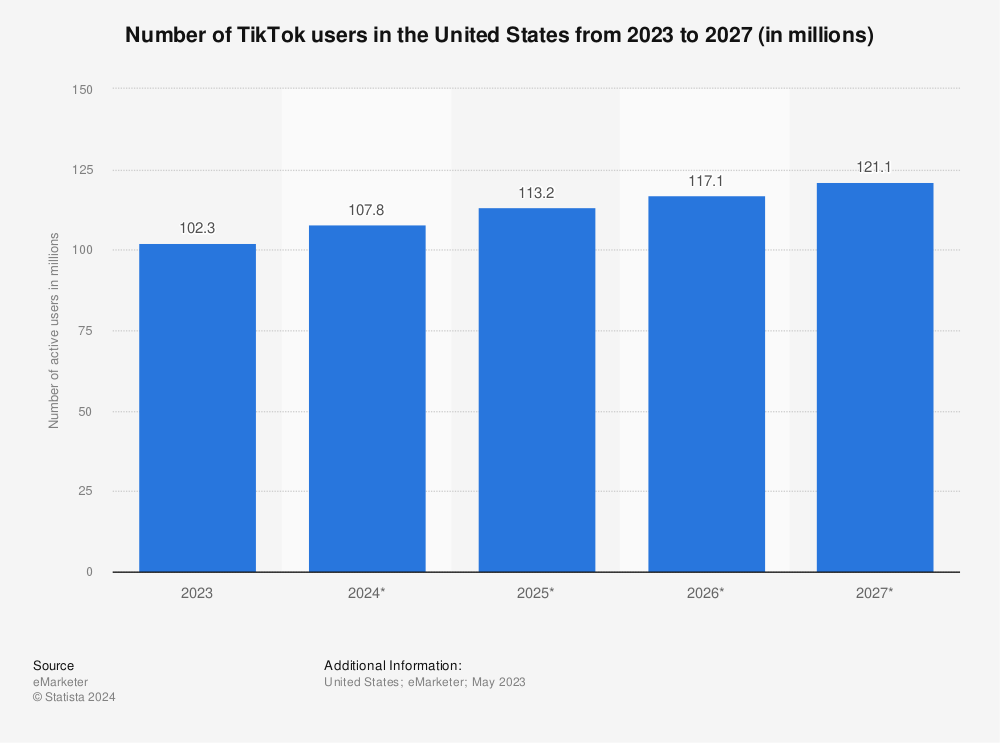
TikTok is, indeed, one of the most popular social media platforms today. Launched in 2017, it reported having 78.7 million users in 2021, with over two billion global downloads, to boot. Yes, it began as an app where teenagers karaoked and showed off dances and made clips to popular songs, and it still mostly caters to a youthful demographic. (As of January 2022, 47.4% of TikTok’s active users are 10–29-year-olds.) But TikTok also offers brands—and people over 30—opportunities to invest in influencer marketing campaigns that can drum up millions of impressions and attract new customers. 

Statistic: Number of TikTok users in the United States from 2020 to 2023 (in millions) | Statista

Read on for our analysis of TikTok—how it started, how it works, and how it’s different from other social media apps—and how you can invest marketing dollars in it to your advantage (with the help of TikTok influencers).


What is TikTok?

TikTok was released in 2016 in China as “Douyin,” but the name changed to TikTok when it hit iOS and Android markets outside mainland China in 2017. A year later, it merged with another Chinese app, Musical.ly, and the combined app was rebranded internationally as the TikTok we US Americans know and love. (The TikTok-Musical.ly merger made sense because both apps were premised on a young audience sharing videos of themselves lip syncing.)

Today TikTok resembles another video platform, YouTube, with one notable distinction: You can buy feature-length films on YouTube, whereas the videos on TikTok are quite short. (The longest videos that users can upload clock in at three minutes.) They’re also generally filmed in a vertical format, or how people tend to hold their phones. TikTok’ers still perform original music as well as cover favorite songs, but other types of videos now pour through the platform—skits, beauty tips, cooking tutorials, videos based on trending sounds or hashtags. Oh, and there are plenty of influencer videos, too. But we’ll get there.


How Does TikTok’s Algorithm Work?

Marketers who tout TikTok point out that users don’t have to toil away for months or years to generate a sizeable following, because its algorithm shows users videos they’ll probably like according to hashtags and accounts they follow, videos they’ve watched or audio clips they’ve listened to before, as well as other variables. So even if you don’t command a large following, if you work popular audio into your videos or tee them up with trending hashtags, you have as much of a chance of your content going viral as an established influencer.

TikTok’s algorithm, then, differs from the algorithms of many other social media platforms, which tend to be structured so the content of users with lots of followers is seen more than users with fewer followers. Creating a video on TikTok that interweaves trending elements is usually a smarter strategy than simply attracting more eyeballs—which, the argument goes, keeps the competition fierce but the content fresh.


TikTok’s (Anti-Marketing) Marketing Potential

TikTok provides its users with a suite of editing features—you can slap captions onto your videos, enhance their lighting, work in musical and animal effects—but those videos still feel preeminently user-generated. Makes sense, except it’s worth noting that TikTok content is a marked contrast to the professional-caliber footage you often find on YouTube. For years now, it’s been a truism that Generation Z (TikTok’s primary audience) seeks out digital experiences that don’t seem curated and trusts brands that feel authentic. Which means the worst mistake you can make on TikTok is to serve users an ad that feels like an ad.

Enter TikTok influencer marketing. Partnering with influencers whose videos consistently go viral can be an excellent way to reach your target audience—presuming your target audience frequents TikTok. Creating email campaigns for a senior living brand? Probably not wise to spend too much of your ad budget on TikTok influencers. Unless those emails are marketed to the adult daughters of seniors, and you just realized that while TikTok feels youth-oriented, 21.7% of its users are aged 30–39 and 20.3% are 40–49. So, find out if your audience is on TikTok, and if they are, hit up an influencer they relate to.


Think Organic

Once you strike a deal with a TikTok influencer, resist the urge to be prescriptive. Followers trusted this influencer before you came on the scene, and if you start creative-directing her, her audience may sense that her content is becoming staid and salesy. Sure, have a conversation about what you want to accomplish, but after you and the influencer align on campaign goals, don’t give her a script. Don’t bring in a film crew. Don’t lecture her about the brand voice. Trust her to promote your product or service with videos that she makes and that seem sincere. 

Challenges, tutorials, brand takeovers, even a funny dance skit—the most effective ads of the near future may be the ones that don’t feel like ads at all. Make peace with that fact, and your brand may be more likely to stay relevant for years to come.