Category Creation Is Oversold. Positioning Is the Fix.

Somewhere in the last few years, category creation stopped being bold advice and became default advice. Every founder deck has a slide claiming a brand-new market with the company parked right at the center of it. We see it all the time at Jacob Tyler with new App ideas, new products, and more.  Since we have integrity, we do our best to explain what we see to our prospects and clients. I mean after all, it is usually way easier to see the forest through the trees when you’re not already IN the forest. We’ve sat through a lot of those decks. The instinct is understandable, and it’s almost always aimed at the wrong problem.

Why everyone suddenly wants a new category

Look at most markets right now and everything blurs together. The palettes match, the taglines rhyme, the homepages could swap logos and nobody would notice. When you feel invisible inside your own category, inventing a fresh one sounds like the escape hatch. Be the only fish in the pond instead of one more fish in the sea.

The advice has a bible, too. Play Bigger made “category king” a boardroom phrase, and the promise underneath it is genuinely seductive: define the game and you get to win it. So founders reach for the manifesto, coin a three-word phrase with “the first” in front of it, and stake out ground nobody asked them to claim. The move feels strategic. Usually it’s just avoidance wearing a strategy costume.

Category creation is real. It’s just rare, slow, and expensive.

Let’s be fair to the idea. Category creation works, and when it works the economics are absurd. Play Bigger’s research found that the category king tends to capture around 76% of the category’s market value, leaving everyone else to split the remaining quarter. That’s the number on the slide. That’s the dream.

Here’s the footnote nobody reads aloud. Those wins take six to ten years, and they cost more than most companies will ever spend on brand. Salesforce, HubSpot, and Workday didn’t name a category and cash the check. They spent more than a decade teaching a market to want something it didn’t know to ask for. That’s the actual job of building a category, and it’s a different job from naming one. Most “category creation” in the wild is renaming a subcategory, rebadging a feature, or printing a manifesto and hoping investors nod. Naming a market and owning one are not the same move. One takes an afternoon. The other takes a decade.

What you probably have is a positioning problem

Here’s the part that stings, because it’s less glamorous and far more common. If buyers keep confusing you with a cheaper competitor, you don’t have a category gap. You have a positioning problem. And positioning is fixable this quarter, not this decade.

Positioning answers three plain questions: who you’re for, what problem you actually solve, and why you over every other option on the buyer’s list. The distinction matters more than the vocabulary makes it sound. A twelve-million-dollar company whose prospects can’t tell it apart from three lookalikes doesn’t win by inventing a category. It wins by getting specific about the one buyer who feels a particular problem more sharply than anyone else, and saying that out loud, everywhere, until it sticks.

This is the same reason most rebrands fail: the company reaches for new visuals when the real gap is a decision nobody made about where the brand sits. Getting seen isn’t a design default. It’s what you force into the work on purpose. A new category is a bet on the future. Clear positioning is a fix for the present.

How to tell which one you’re actually doing

There’s a quick honest test, and it only has one question. Does the market you’re describing already have buyers with budget and intent? Or would you have to teach them the problem exists before anyone reaches for a wallet?

If the demand already exists and you’re losing it to sameness, you have a positioning job. Get clear, get specific, get chosen. If you’d genuinely have to create the demand, and you have a decade of runway and the budget to teach a market from scratch, then maybe, maybe, you’ve got a category worth building. Most companies have the first problem and reach for the second answer. It’s more fun to announce a category than to admit your pitch is muddy.

So before you go build a category, get honest about whether anyone’s asking for it yet. If they already are and they just can’t tell you apart from the pack, that’s a positioning problem, and it’s the faster one to fix. If you’d rather not sort that out alone, that’s the conversation we like having first.

Brand Naming Isn’t Generated. It’s Chosen, Then Earned.

The hardest part of brand naming was never coming up with names. It was deciding which one you’d defend for the next ten years. AI made the easy part free and left the hard part exactly where it’s always been.

Type a few words into a naming tool and you’ll have two hundred candidates before your coffee’s cool. That feels like progress. It isn’t. A list of two hundred names you can’t choose between is the same problem you started with, just heavier.

Brand naming has a new bottleneck, and it isn’t ideas

For most of the last twenty-six years, the slow step in naming was generating enough good options. You’d fill whiteboards, kill your darlings, and come back the next morning with twelve more. Generation was the grind.

That grind is gone. A model trained on the whole internet will hand you portmanteaus, invented words, Latin roots, and misspelled animals all day. So the constraint moved. The scarce thing now isn’t candidates. It’s the judgment to pick one and the nerve to stand behind it.

Choosing a name is choosing a position. And a position is something a person has to be willing to sign their name to.

The good names are taken. That’s not a naming problem

Here’s where most naming projects actually die. You land on the name everyone loves, you start telling people, and then someone checks. The trademark belongs to a company two states over in a related class. The .com sold years ago and the broker wants half a million for it. More than 160 million .com domains are already registered, so nearly every plain-English word and tidy combination is long gone.

Founders read that as a naming failure. It’s a strategy failure that showed up late. If your shortlist is stacked with descriptive names like “CloudSync” or “DataBridge,” you were always going to lose this fight. Descriptive names are the ones everyone else wants too, and the ones trademark law protects least.

Look at what actually wins. Notion, Figma, Linear, Vercel, Perplexity, Anthropic, Mistral. Not one of them tells you what the company does. They’re distinctive and ownable precisely because they started as blanks. The .ai extension overtook .io as the default for new AI companies for the same reason the names got stranger: the obvious slots were full. Check the trademark and the domain before you fall in love, not after the cards are printed.

A name means nothing until you make it mean something

Ask someone in 2015 what “Notion” was and they’d have guessed a vague idea. Now it’s a category. The word didn’t change. The company poured a decade of product, design, and consistency into it until the name absorbed the meaning. That’s the half of naming no generator can touch.

A name on day one is an empty container. It doesn’t carry your strategy, your voice, or your reputation yet, because you haven’t put any in. The work is the pouring: using it everywhere, saying it the same way, building a brand sharp enough that the name starts to stand for one specific thing. We’ve watched this play out for twenty-six years. The brands that win aren’t the ones with the cleverest name. They’re the ones who committed to an ordinary-sounding one and made it unforgettable through everything around it.

It’s the same reason distinctiveness keeps coming down to human decisions and not default outputs. A generator hands everyone the same average. The meaning is the part you build by hand. The firms that have named brands for decades will tell you the same thing.

Use AI for the easy half. Own the hard half

None of this makes the tools useless. They’re good at the divergent step. Feed a model your positioning and it’ll surface linguistic roots, flag the cross-language landmines (the classic trap is a word that means something embarrassing in another market), and push your range past the four ideas you’d have had alone. Use it for breadth. That part it does well.

What it can’t do is the convergent step. It can’t tell you which name your company can grow into, which one a competitor can’t copy, which one survives a board meeting and a global rollout and still feels like you in three years. That’s taste, and risk, and knowing the brand. A machine generates options. A person owns the choice.

So before you let a tool hand you a name, get clear on what the name has to carry: the strategy, the voice, the room to grow. If you’d rather not sort the two hundred candidates down to the one you can actually defend, that’s the part we do with clients. The generator was never the hard part. Choosing well still is.

Brand vs Performance Marketing: The Blame Game

Brand or performance. Pick one.

Twenty-six years in, we’ve watched marketing leaders treat that as a real question. It wasn’t. The decks change. The fight doesn’t. Brand vs performance marketing was always a budget argument dressed as a strategy argument.

And in 2026, the argument is finally ending. Not because anyone won. Because the math stopped working.

The divide was always a budget argument, not a strategy one

Look at how most marketing orgs were built over the last decade. Brand teams sat on one side. Performance teams sat on the other. Brand wrote the manifesto. Performance ran the Google Ads. Brand reported on awareness lift. Performance reported on ROAS. The handoff between them was, charitably, a forwarded email.

That structure didn’t appear because brand and performance are fundamentally different disciplines. It appeared because the two halves reported to different VPs, defended different line items, and used different vendors. The org chart created the divide. The customer never noticed it.

Customers don’t experience brand and performance as separate channels. They experience a brand. They Google the brand. They click a banner. They watch a YouTube pre-roll. They get a retargeting ad. They read a friend’s recommendation. Somewhere in there, they decide. The fact that your CMO has two teams owning different slices of that journey is your problem, not theirs.

Performance doesn’t convert what brand didn’t build

Here’s what twenty-six years has taught us. Performance marketing is a magnifying glass. It makes whatever exists bigger. If the brand exists in the customer’s head as something specific, sharp, and trusted, performance amplifies that. The clicks convert. The CAC behaves. The retargeting ad reminds them of something they already wanted.

If the brand doesn’t exist as anything in particular, performance amplifies that too. The clicks come in. They don’t convert. The CAC creeps up. The retargeting ad reminds them of a company they don’t remember. Then someone on the performance team gets fired.

The pattern is so consistent it should be embarrassing. Brands with weak positioning blame the media buyer. Brands with strong positioning credit the media buyer. Both are wrong. The media buyer is doing the same job in both shops. What’s changing is whether the customer recognizes what they’re being sold.

The 2026 math killed brand vs performance marketing

Three things that happened in recent years that made the fight end…

First, the privacy decade caught up. Third-party cookies are gone, attribution windows narrowed, and the easy direct-response math that justified pure-performance budgets stopped balancing. When you can’t track the conversion cleanly, you can’t take credit for it cleanly either. The brand-built demand that performance was harvesting started looking less like “wasted spend” and more like the only thing keeping CAC sane.

Second, AI flattened the production layer. Anyone with a $20 a month subscription can produce a serviceable display ad in twelve minutes. Distinctive creative is no longer where the dollars went. Distinctive positioning is. A great Meta ad on a forgettable brand still loses to an okay Meta ad on a brand the customer trusts.

Third, the CMO seat changed shape. Prophet’s 2026 CMO Guide reports that CEO and CFO confidence in long-term brand investment has slid from 80 percent to 69 percent in two years. Brand marketers can either fight that on principle, which they keep losing, or they can stop pretending performance is the enemy and start showing how brand work moves the same numbers performance was hired to move. Think with Google’s 2026 outlook is unusually blunt about it: retire “brand or performance,” because the funnel is one engine now.

What integrated actually looks like

Integrated doesn’t mean merging the brand team and the performance team into one Slack channel and calling it a day. We’ve watched that fail. The cultures are different. The pacing is different. The vendors are different.

Integrated means the brief that goes to the brand creative and the brief that goes to the campaign development are the same brief. The brand team isn’t writing about who the company is while the performance team is writing about a 10 percent off code. They’re saying the same thing, in the same voice, to the same customer, at different stages of the same decision.

That requires one person who can hold both halves at once. Sometimes it’s a CMO. Sometimes it’s an agency partner. It’s never a committee.

Decide who that person is on your team. If you don’t have one, that’s the work.

If you’d rather not figure that out alone, that’s where we come in. We’ve spent twenty-six years working on brands where both halves had to land.

Holding Company Agency Collapse: What Your Brand Just Lost

The holding company agency you hired isn’t the agency you have anymore. WPP just folded Ogilvy, VML, AKQA, and Burson into a single unit called WPP Creative, with $500 million in cuts targeted across three years. Omnicom and IPG closed their merger and added four thousand layoffs on top of it. If your brand sits in any of those rosters, your team is being reorganized this quarter, whether anyone has told your CMO yet.

This isn’t a holding company problem. It’s a client problem dressed as one.

The holding company agency model isn’t broken. It’s being broken.

For twenty-six years we’ve watched clients buy from the big networks and walk back to us when the named partner stopped showing up. The pattern is so well-worn we used to joke about it. Now it isn’t a joke. WPP’s Elevate28 plan isn’t a brand evolution. It’s a cost-out. Ogilvy, VML, and AKQA still have lobbies and websites, but the senior strategists, the dedicated account leads, the people who knew your category, those are the line items being optimized.

If your brand is mid-roster, you’re being merged into a function. If you’re top-roster, your team is being asked to cover three more accounts. Either way the agency on the contract isn’t the agency in the room.

“One throat to choke” was always selling you the wrong thing

The pitch for the big networks has been the same since the eighties. One point of service. Integrated capabilities. Global scale. The case for hiring WPP or Omnicom was that you bought access to every specialist in every market, knit together by the parent.

Nobody outside the parent ever believed it. Clients hired the holding company and worked with the named shop. The named shop’s senior people delivered the work. The parent existed for procurement, IT, and the quarterly earnings call. The promise of integration was structural. The value was always the people.

Now the parent is reorganizing because the structure is what’s expensive. The “one throat to choke” pitch turned out to also mean “one place to cut.” Adweek’s read on the WPP move is that it’s overdue and underbuilt. We’d put it differently. The model worked while growth covered the overhead. It doesn’t anymore, and the overhead is the part you liked.

Ironically, Jacob Tyler has been hired previously to assist during times of transition during holding company re-orgs and more which also goes against their “one throat to choke” project ownership pitch.

What disappears when an agency folds into a unit

Senior attention goes first. The strategy director who walked your team through the rebrand pitch is now coordinating three pitches for the new “creative arm.” Your work moves down the bench.

Institutional memory goes next. The art director who absorbed the visual system your last CMO commissioned is being asked to also know the visual systems at two other accounts. The handoff document doesn’t transfer twenty months of context.

Then the named-shop culture goes. The reason Ogilvy felt like Ogilvy was an editorial standard the office held to. The reason AKQA felt like AKQA was a craft-and-tech instinct concentrated in one room. Both are being asked to share back-end with everybody else under the same roof. Forrester predicts eighty-five percent of B2C marketing executives will review their agency in 2026. The number is high because what marketers thought they were buying isn’t there to buy anymore.

What to ask if your AOR just changed shape this quarter

This isn’t the moment to wait it out. It’s the moment to make the agency answer four specific questions, in writing.

Who is on my team next quarter, by name? Not by title, not by capacity, by name. If three of the five names you got on the pitch are no longer with the firm, the firm isn’t the firm.

Who decides if my account loses a person? Inside the new merged structure, ask who has the authority to pull your lead onto another account. If the answer is “integrated leadership,” your lead is shared.

What changes about how my work gets made? Back-end consolidation usually means production moves to a shared resource pool or offshore. Find out where, with whom, and what changes about the timeline.

What’s the senior-time guarantee on the contract? If your strategy lead’s name is in the SOW, get the number of hours per quarter in writing. If it isn’t, that wasn’t part of what you bought.

Twenty-six years in, the failures rhyme. The brands that came out of the last consolidation cycle clean were the ones who knew the answers to those four questions before the parent re-org went public. The brands that came out bruised assumed the agency they’d liked would stay the agency they’d liked. That’s not how scale works on the way down. Strong brand strategy survives an agency change. A relationship that lived inside one person’s calendar doesn’t.

If your AOR is part of a parent that’s being restructured, the most important conversation of the year is the one you have with your account lead by Friday. Ask the four questions. Get the answers in writing. Then decide what kind of partner your brand actually needs from here. If you’d rather not figure that out alone, that’s where we come in.

Brand Differentiation in the AI Era: Taste Is the Only Moat

Generative AI didn’t kill brand differentiation. It exposed how few brands ever had any.

Strip away the vibe-coded landing pages, the prompt-driven logo generators, and the gradient-stack startup template, and you’re left with the question every agency has been quietly asking since 2000: what actually makes one brand impossible to confuse with another? Most of the trend pieces in 2026 will tell you the answer is taste. We agree. We just think most of the conversation about taste is using the wrong definition of the word.

Brand differentiation: the visual baseline just flatlined

The flood is here. Templates that look indistinguishable from competent agency work cost ten dollars a month and ship in an afternoon. Image generators output landing-page hero shots that fooled us when they first appeared and bore us now that they’re everywhere. The shared observation across every design-trend roundup we’ve read this spring is the same: the visual baseline has flatlined.

That’s not a complaint. It’s a diagnosis. AI didn’t make design worse. It made the floor much higher and the ceiling no different. The work that used to set a brand apart, the polished hero, the elegant grid, the moody photography, is now table stakes. A brand competing on production polish in 2026 is competing on the part of the work AI is best at.

We’ve watched this happen before. Every time a creative tool democratizes a craft, brand differentiation moves up the stack. Photoshop did it to retouchers. Squarespace and Wix did it to small-business sites. AI is doing it to everything below the strategy layer. The brands that win in the next decade won’t outproduce the AI. They’ll out-decide it.

Taste isn’t an eye. It’s a refusal.

The word taste gets thrown around in 2026 like it’s a personality trait. Taste is the only moat, the headline-writers say, and they’re right about the moat. They’re vague about the taste.

Here’s the version we’d defend after twenty-six years of building brands. Taste isn’t an eye. It’s a refusal.

A designer with taste isn’t someone who recognizes the good options. It’s someone who has spent years learning which good-looking options are wrong for this brand and saying so out loud. The discipline shows up as a long list of things the brand will not do. Fonts it won’t use. Words it won’t say. Categories it won’t enter. Discounts it won’t run. Trends it won’t follow even when its competitors are running toward them with their hair on fire.

That’s the moat. Not the choices on the page. The choices that didn’t make it.


What taste looks like when a brand actually has it

Look at the brands you can identify from a single object across the room. They share one trait. They have been ruthlessly selective about what they put into the world.

Liquid Death sells canned water. The brand could have leaned into wellness, hydration, mindfulness, eco-credentials, the same well-mapped territory every other beverage startup raced into a decade ago. It refused all of it. Heavy metal aesthetics, mock horror, a stripped-down can that reads more like a craft beer than a Gerolsteiner clone. The refusal is the brand. The product is incidental.

Apple has refused feature-comparison advertising for nearly thirty years. Every other consumer technology brand of the same era has, at some point, lined up specs on a chart and pointed at the bigger number. Apple’s competitors still do it in 2026. Apple doesn’t. The brand pays for that refusal in lost short-term clarity, and gets paid back in the part of the brand nobody else can copy: a customer who trusts that the company has already made the obvious decisions on their behalf.

Hermès refuses to scale. Patagonia refuses to grow recklessly. The New York Review of Books refuses to put a cover line on the cover. None of these refusals are aesthetic. They’re strategic. The aesthetic is what the refusal looks like once it’s been practiced for thirty years.

When we audit a brand for the first time, we don’t start with what it does. We start with what it has stopped itself from doing. If we can’t find a clear list of refusals, we know what we’re looking at. We’re looking at a brand that’s been improvising its identity, one tactic at a time.

Why AI cannot do this work, even in principle

This is the part the trend pieces tend to skip. Why can’t AI develop taste over time?

Generative models are statistical machines that produce work close to the average of their training data. That’s the technology, not a stage of development. A model can be tuned, prompted, fine-tuned, given style guides and reference images and tone descriptions, and it will get better at imitating a brand’s surface. It still can’t refuse on principle. It can only refuse because somebody told it to.

A brand’s principles, the things that make it impossible to confuse with anything else, are negative space. They’re the choices the brand has rejected so consistently that the absence becomes recognizable. AI is a yes-machine. Ask it for ten options and it gives you ten. Ask it which to keep and it picks the one that looks most like the rest. The model has no skin in the game and no reputation to protect, so it has nothing to lose by saying yes.

Humans with twenty-six years in the room have something at stake every time they say no. That’s where taste lives. Not in the skill of the hand. In the cost of the refusal.

Where most brand differentiation efforts go wrong

A lot of agency work in 2026 is going to sell taste as a deliverable. Most of it will be selling the wrong thing.

The most common mistake is treating taste as aesthetic preference. A brand hires a creative director with a strong portfolio, tells them to make it look great, and turns them loose on the homepage. The work gets prettier. The brand isn’t more distinctive. The CD is doing taste-as-eye, not taste-as-refusal, because nobody has given them the authority or the strategic frame to say no to the CMO’s pet feature, the founder’s favorite trend, or the board’s pressure to look like a competitor.

The second mistake is auditing for what’s there instead of what should not be. A brand audit that catalogs every touchpoint, every channel, every visual asset, and grades them against polished competitor work, will produce a tidy report and almost no useful direction. The useful audit asks the harder question. What is this brand doing that a competitor could do just as well? Cut all of that. What’s left is the brand.

The third mistake is the most common in fast-growing companies. The team is so afraid of leaving any segment unaddressed that the brand says yes to every audience, every channel, every category adjacency. The result is a brand that looks like every other brand at its growth stage. We’ve seen this play out for twenty-six years. The companies that broke through were not the ones who tried to be everything. They were the ones who picked what they were and refused the rest.


The no-list: how disciplined brands actually build it

If you’d like to start somewhere concrete, build a no-list before you build anything else.

A no-list is shorter than a brand book. It’s a written document, kept current, that names the things this brand will not do. Categories you won’t enter. Words you won’t say in your copy. Visual moves you won’t make. Discount mechanics you won’t run. Customer segments you’ll politely send to a competitor.

The no-list is the most underrated brand creative document in the agency’s toolkit, and it’s the one most brands don’t have. Not because it’s hard to write. Because writing it forces a fight nobody on the marketing team wants to have. Every “no” on the list is a position that somebody, somewhere in the organization, is going to want to violate the next time pressure is on.

That’s the point. The no-list is a contract with your future, more pressured self. We’ve seen brands keep one for years and treat it like the constitution. We’ve seen others keep one for a quarter and quietly let it go when the first big tactical compromise rolls in. The first kind of brand develops taste. The second kind develops a logo system.

Build the no-list. Update it once a year. Read it in every campaign meeting. The discipline of refusal isn’t glamorous. The brand it produces is.

What brand differentiation looks like once AI handles the rest

In a market where AI can produce competent creative for $100 dollars a month, the work that used to differentiate brands has been moved into the commodity column. The differentiating work has moved up. Strategic clarity. Editorial discipline. The judgment to refuse the obvious option even when it’s the option the AI most confidently recommends.

The next two years will sort brands into two groups. The first will use AI to produce more of what their competitors are already producing, faster, and they’ll discover that more of the same, faster, isn’t a position. The second will use AI to handle the work that no longer needs human judgment, and they’ll spend their human hours on the part of the work AI can’t touch: the refusal, the position, the standard nobody else is willing to hold.

The agencies that thrive will be the ones helping the second group. Not because we type prompts faster, but because we’ve spent two and a half decades in rooms saying no on a brand’s behalf. Distinctive isn’t an AI default. Distinctive is what humans force into the work, on purpose, by leaving most of the obvious options on the cutting-room floor.

This is what creative and strategy retainers are actually for. Not deliverables on a calendar. A standing relationship with a partner who knows your brand well enough to say no on your behalf, in the meeting where it matters, before the bad idea ships.

If you’d rather decide what your brand refuses than improvise it later, that’s where we come in.

Anti-AI Design Isn’t a Backlash. It’s a Standards Reset.

Anti-AI design isn’t a backlash against AI. It’s a backlash against average. The two look identical from a distance, but only one of them tells you what to actually do about it.

We’ve watched this play out for twenty-six years, just with different villains. Stock photography was supposed to kill original photography. Squarespace was supposed to kill web design. Now AI is supposed to kill creative work entirely. And every time, the same thing happens. The floor rises. Average gets cheap. Distinction gets expensive. Brands that bought into “good enough” learn what “good enough” buys you.

The 2026 version is louder than the others, because the floor rose faster. The play is the same.

Anti-AI design isn’t the story. Anti-average is.

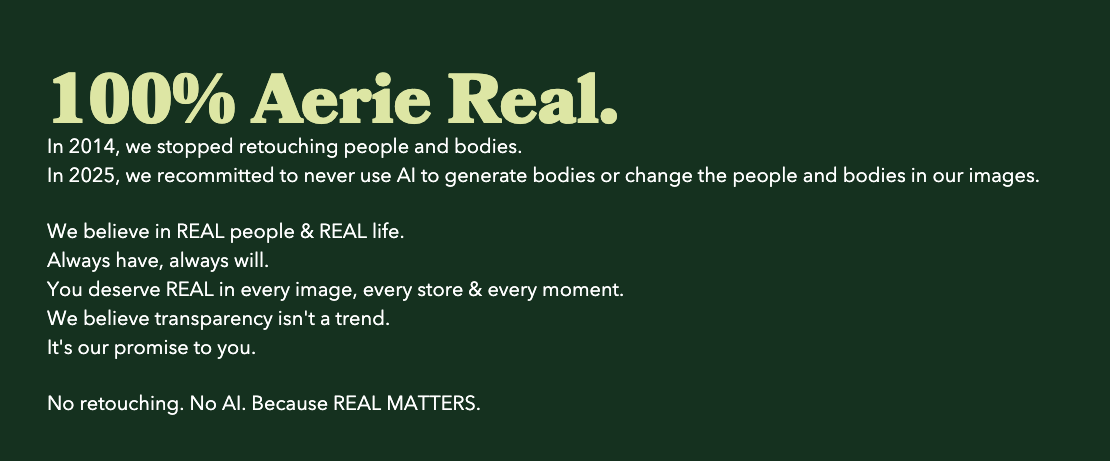
Look at what the brands getting credit for “anti-AI” stances are actually selling. Aerie pledged “No retouching. No AI. 100% real people,” and engagement on the post jumped 75%. Equinox built a 2026 campaign called “Question Everything But Yourself” around unfiltered human portraits set against synthetic ones. Almond Breeze ran cheeky ads about not using AI in its creative. None of these brands are fighting AI. They’re using AI as a foil to say something they could have said any year of the last twenty.

Aerie has been telling this story since 2014. The “100% Aerie Real” line predates ChatGPT by almost a decade. AI didn’t change Aerie’s brand. It changed what Aerie’s brand sounds like in the room.

That’s the whole movement. Brands with a real point of view sound sharper now, because the average around them got blander. Brands without one are still in trouble, only louder.

What “human-made” actually signals to a buyer

The “human-made premium” framing is real, but the diagnosis is off. Customers aren’t paying more because a person’s fingerprint is on the work. They’re paying more because the work is specific. It addresses them. It picks a side. It risks something.

AI-generated copy and AI-generated visuals have a tell, and it isn’t a watermark. The tell is that nothing is at stake. The voice is hedged. The composition is symmetrical. The metaphor is one of the seven any model can produce on demand. Customers can feel the absence of decisions. They might not name it that, but they vote with their attention.

When people say they want “human” content, they usually mean they want content that knows who it’s for and isn’t afraid of being wrong about it. AI can technically do this, with a sharp brief and a strong editorial hand on top. The brands getting it right aren’t anti-AI. They’re anti-default.

The work the polish can’t fake

Here’s the part that matters for anyone building a brand right now.

The cheap parts of design got cheaper. Layout, color, type pairing, basic illustration, photo retouching, mood-board generation. Anything that was a craft skill in 2020 is a slider in 2026. That’s real, and it isn’t going back.

The expensive parts got more expensive. A point of view the company can defend in a board meeting. Naming that earns trademark protection and survives a Google search. A voice that sounds like one specific company, not a category. A visual identity that’s recognizable from a quarter-mile away with the logo cropped off. None of these get easier because the production layer got faster.

Twenty-six years in, the failures rhyme. The brands scrambling right now didn’t get killed by AI. They got exposed by it. The average work was carrying them. Now it isn’t.

What this means if you’re building a brand right now

Stop benchmarking your work against last year’s average. Last year’s average is now free. If your creative output looks like what a model produces on the second prompt, it’s not creative output anymore. It’s a placeholder.

Spend the saved time on the parts that don’t get cheaper. A defensible position. A brand voice that picks a fight, however small. A visual system that holds up when stripped to one element. The work that was always good is suddenly the only work that survives.

If you’re using AI, say so. If you aren’t, say that too. The brands winning right now aren’t winning because they’re anti-AI. Frankly, the team at Jacob Tyler is not anti-AI. We are anti -average. Our clients are winning because they decided what they actually believe before anyone wrote the brief.

If you’d rather not figure that out alone, that’s where we come in.

Why Rebrands Fail: The Strategy Most Companies Skip

Rebrands almost never fail because of the design. They fail because of what nobody talked about before the design started.

We’ve watched this play out for twenty-six years. A company decides it’s time. Leadership wants something fresh. The agency wins the project, sketches a few directions, the team picks the cleanest mark, and the new identity ships. Six months in, sales hasn’t moved. Customers haven’t noticed, or noticed and pushed back. Internal teams are still using the old templates because the new ones don’t fit how they actually sell. The CEO calls the agency to “tweak” the work. That call is not a creative problem. That call is a strategy problem that arrived dressed as one.

Industry research puts the rebrand failure rate near 40 percent, with another fifth of poorly executed rebrands losing meaningful chunks of their customer base in the months after launch (per analysis of rebrand mistakes across the last decade). The number is too high to be a coincidence, and it doesn’t drop because the next round of agencies are better designers. It drops when companies stop treating rebrands as visual exercises and start treating them as strategic ones.

This is the piece we wish more clients read before the kickoff meeting. Not because we’re trying to scare anyone out of doing the work. The work is worth doing. The cost of doing it wrong is a year of wasted budget, a confused sales team, and a customer base that quietly stops paying attention.

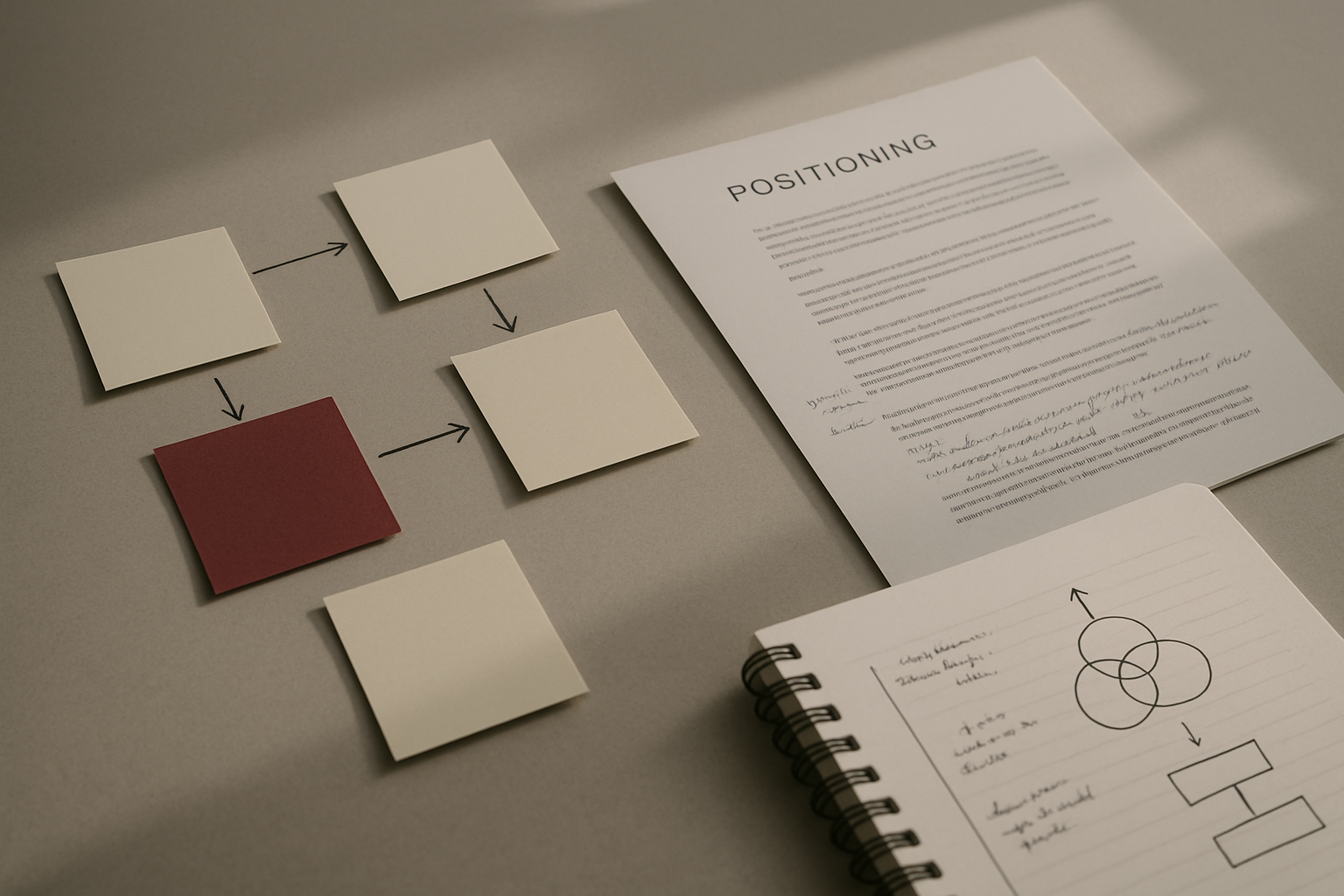
A desk with sticky notes mapping brand strategy paths, a printed positioning document with margin notes, and hand-drawn diagrams on a notepad.

Rebrands don’t fail because of the design

When a rebrand misses, the autopsy almost always blames the new logo. Tropicana lost roughly 20 percent in sales the month after their 2009 redesign. Gap retreated from theirs in six days. Yahoo iterated through three identities in five years and still couldn’t shake the perception of decline. Each of those is a design story on the surface. Underneath, they’re all the same story. The company didn’t know what it stood for, and the new identity made that visible.

Customers don’t reject new logos because the marks are ugly. They reject them because the logo doesn’t match the relationship they had with the brand. The visuals were never the contract. The contract was: this is who you said you’d be, and this is what you said you’d do. When a rebrand reveals that the company hasn’t decided either of those things, customers feel the gap. The design becomes a lightning rod for a problem that lived elsewhere all along.

Strong brands earn the right to change their visuals. Weak brands hide behind new ones. The harder a rebrand fights for attention, the louder it announces that the work underneath wasn’t done.

Why rebrands fail is rarely a creative problem

Read the postmortems on the public rebrand failures of the last few years and the same root causes appear. Customer research that didn’t happen. Stakeholder alignment that broke at the executive level. A positioning shift that nobody on the brand side could explain in a single sentence. A competitive analysis that ended at “we want to look more like X.” Heritage equity discarded for the wrong reason.

None of those are aesthetic problems. They are strategy gaps that the design phase exposes but cannot fix. Brand identity is downstream of brand strategy. When the strategy is missing, the identity has to do the work of two phases at once, and it always shows.

Mid-market companies hit this wall most often. They’re large enough to want the rebrand to feel substantial and small enough that one strong opinion in the executive room can override a decade of customer signal. Enterprise rebrands have more layers of approval, which is its own problem. The mid-market trap is specific. The founder, the new CMO, or the new investor walks in with a clear visual preference, and the strategic conversation gets compressed into a moodboard review. By the time the agency presents identity directions, the conversation that should have happened is six months behind.

Four kinds of rebrands, and why companies pick the wrong one

Not every rebrand is the same animal. Knowing which one you’re actually doing is half the work. Most companies misdiagnose this on day one and spend the next twelve months building the wrong thing.

  1. Refresh. You keep the equity, modernize the system. The wordmark stays recognizable. The palette tightens. Typography catches up with where the brand wanted to be five years ago. This is the right call when the strategy is solid, the audience hasn’t shifted, and the visuals just feel dated. It’s also the right call far more often than companies want to admit, because it’s harder to sell internally as transformation.
  2. Refocus. The strategy has shifted, the audience has narrowed or expanded, and the brand needs to express a new center of gravity. The visual system changes meaningfully, but the company is still recognizable to its existing customers. This is the most common rebrand done well. It’s also the one most often disguised as a refresh because the strategy work feels uncomfortable.
  3. Rebuild. The company is functionally a different business than it was. Acquisition. Pivot. New core product. New buyer entirely. The old name might survive, but everything else gets rethought from positioning down to the URL. Done right, this works. Done because someone is bored with the old brand, this becomes the case study other agencies use to scare clients.
  4. Rename. The rarest and the riskiest. You’re throwing away the equity in the name itself, which means the new brand has to earn recognition from zero while the old one still echoes. Reserve this for genuine reasons. Legal. Geographic expansion. A name that no longer reflects the business at all. Almost never do this for stylistic reasons.

The mistake we see most often is companies who needed a refresh ordering a rebuild, and companies who needed a rebuild ordering a refresh. The rebuild crowd burns equity they didn’t have to. The refresh crowd ships an identity that can’t carry the new strategy and has to redo the work eighteen months later. The first hour of any rebrand engagement should answer this question, not the last.

A clean office wall pinned with rows of design direction printouts, abstract shape studies, and color swatch cards arranged in clean grids.

The audit you keep skipping. What a real one finds.

A brand audit is not a slide of your existing logos with notes about kerning. A real audit is a diagnostic tool. It connects what your brand currently does to what your business actually needs, and it surfaces the gaps you’ll spend the next year trying to close.

What a useful audit looks at, in order:

  • Customer perception. Not what your team thinks the brand stands for. What buyers, lapsed buyers, and prospects actually associate with you. This is where the comfortable assumptions die first.
  • Internal alignment. Whether the executive team, sales, and product can describe the brand the same way without coordinating their answers in advance. This is the single best predictor of whether the rebrand will hold up under pressure.
  • Competitive position. Where you sit in the buyer’s mental map relative to the three or four companies they consider you against. The goal is not to be different in every direction. The goal is to be different in the direction that matters to the buyer’s decision (a useful B2B brand-audit framework lives here).
  • Brand equity inventory. What you’ve already built that’s worth keeping. Most rebrands underweight this. The equity in a familiar name, a recognizable color, or a tone of voice that customers expect is harder to rebuild than to preserve.
  • Activation gap. Where the brand promise lives strongly and where it falls apart. Onboarding. Sales materials. Support touchpoints. The website’s third-level pages. The rebrand has to plan for those, or the new identity dies inside the existing operations.

Companies that run this kind of audit before identity work usually conclude they need less of a rebrand than they thought, and a sharper one. That’s the right outcome. A small, decisive change applied to a clearer position outperforms a large, uncertain change applied to a fuzzy one every time.

The AI-rebrand era is making it worse, not faster

The new wrinkle in 2026 is that AI lets companies generate identity directions in days. That sounds like a productivity gain. In practice, it’s compressing the strategy phase to almost nothing because the visual phase looks so cheap. If a logo costs an afternoon, why spend three months on positioning?

Because the logo is the easy part. Always was.

We’ve seen mid-market clients show up with twenty AI-generated identity directions and a calendar that compresses strategy into a single workshop. The directions look polished. They also look like every other brand running the same prompts on the same tools. Recent research in Trends in Cognitive Sciences confirmed what creative directors have been saying out loud. AI-generated content trends toward statistical similarity over time. Same models. Same prompts. Same training data. Same output pattern. Distinctive isn’t an AI default. Distinctive is what humans force into the work.

This is the next decade’s competitive advantage and it is unglamorous. The brands that will stand out are the ones whose strategy is clear enough that the visual execution can’t dilute it. AI helps if you know what you’re trying to express. AI hurts if you don’t, because it gives you twenty reasonably good directions for a brand whose positioning isn’t reasonable yet.

A useful test: if your company can’t write its positioning in two sentences a board member could repeat, no amount of identity exploration will fix the problem. Spend that month on the positioning. The identity becomes obvious afterward.

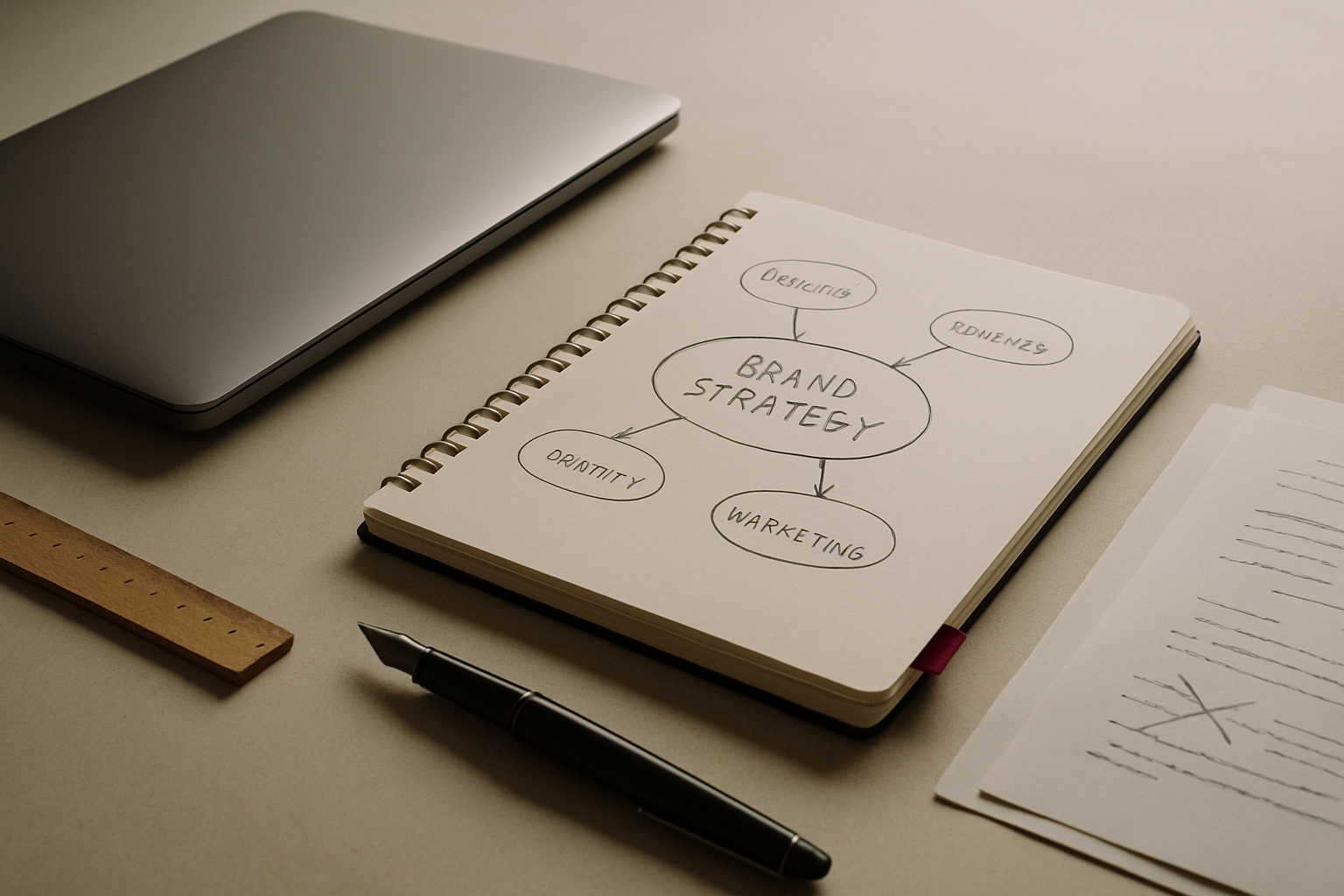
A closed laptop next to a hand-drawn brand strategy diagram in an open notebook, an analog ruler, a fountain pen, and annotated printouts.

The first 90 days of a rebrand that lands

The rebrands that work tend to follow the same arc. None of it is glamorous. All of it is unskippable.

In the first thirty days, the team runs the audit. Customer interviews. Internal stakeholder interviews. Competitive review. Brand equity inventory. The deliverable at the end of this month is not a deck of mood boards. It’s a clear statement of what the brand currently is, what the business needs the brand to become, and what the gap looks like. If the team can’t articulate that gap in one paragraph, the next sixty days will not save the work.

In days thirty to sixty, the strategy lands. Positioning. Voice. The narrative that explains the company to a buyer who has never heard of it. Architecture, if it’s a multi-product company. The deliverable is a strategic platform that can be defended without slides. If the executive team can read it back to each other and not flinch, the team is ready to design.

Days sixty to ninety are when identity work begins, not where it ends. The visual system. The voice in market. The system documentation. The rollout plan. This is the part most companies want to start in week one. Starting it in week nine is what makes it work.

The 90-day arc is not a magic number. Some rebrands need six months for the strategy phase alone. Some need less. The point is the order. Audit, then strategy, then identity, then activation. Skip the order and you become the case study nobody wants to be in.

Brand strategy is the part nobody can outsource to a tool

Rebrands fail in 2026 for the same reason they failed in 2006. Companies decide what the brand should look like before deciding what it should be. The tools have changed. The tools have gotten faster. The mistake hasn’t moved.

If you’re considering a rebrand, you have one decision to make before you talk to any agency, including ours. Decide whether you’re solving a strategy problem or a design problem. If you don’t know, you have a strategy problem. The audit will prove it. The fix is harder than a redesign and worth more than one. If you’d rather not figure that out alone, that’s where we come in.

AI Search Visibility: Why Your Brand Is Invisible to ChatGPT

Search engine optimization isn’t dead. The scoreboard just changed, and AI search visibility is the new race most brands aren’t running.

Buyers in 2026 don’t always start with Google. They start with ChatGPT. Or Claude. Or Perplexity. They type “best [whatever] for [specific situation],” read a paragraph, and trust the recommendation. Increasingly, that recommendation never mentions you. Industry estimates suggest 73% of brands are invisible when AI tools generate recommendations in their category. Page-one rankings on Google don’t transfer. New rules, same panic, fresh acronyms.

The new AI search visibility problem is real, but it isn’t new

The mechanics are different. Large language models don’t crawl your site for keyword density. They reference what was in their training data and what gets retrieved live by the AI tool’s search layer. They favor brands that are talked about elsewhere — by reviewers, journalists, podcasters, customers, partners — and that have a clear, consistent identity to begin with. That part isn’t new. That’s how a brand has always become recognizable. AI search just made the lack of recognition more visible, faster.

What’s changed is that “first page of Google” no longer doubles as a brand-recognition trophy. A site can rank for its category and still go unmentioned the moment a buyer asks an AI for a recommendation. That’s a new problem for marketing teams. It’s not a new problem for branding.

Why “AEO” is mostly old work in new packaging

The category just spawned its own three-letter acronym pile: AEO (answer engine optimization), GEO (generative engine optimization), and now agentic engine optimization, which is somehow also AEO. April 2026 was openly framed by analysts as the “AEO inflection point”, complete with a wave of agencies relabeling their SEO retainers. The acronyms are profitable. They are not insightful.

Strip the labels and three things determine whether an AI cites you:

  • Whether your brand has a clear point of view that’s easy to summarize.
  • Whether credible third parties have written about you in language that maps to how buyers actually ask.
  • Whether your own content directly answers the question, in plain language, near the top of the page.

That’s the work. It’s the same work a thoughtful brand strategist would have prescribed in 2010. The packaging is louder, but the prescription is older than any of the acronyms describing it.

What actually fixes AI search visibility

Concrete moves, in roughly the order they’ll matter:

Get your brand messaging sharp. One sentence that says what you do, for whom, and why it’s different. If your team can’t agree on it, neither can ChatGPT.

Build third-party authority. Earned mentions on credible sites, podcast appearances, partner write-ups, real customer reviews, expert directories. AI weighs what others say about you more than what you say about yourself. This is PR’s moment, not link-building’s.

Front-load the answers on your top pages. Question-format H2s. A direct answer in the first paragraph. Specifics — numbers, named situations, real outcomes — close behind. AI tools cite the first portion of a page far more often than the rest. Stop burying the lead.

Maintain entity consistency. Your Wikipedia entry, Google Business Profile, schema markup, and major directory listings should all describe the same company in the same words. Fragments confuse the model.

Pick fewer topics and own them. Topical depth beats topical breadth. A handful of well-argued substantive articles are worth more than a year of skim-pieces.

The hardest part to outsource

The brands that win in AI search are mostly the brands that were worth winning before AI search existed. They have a sharp position. They’ve earned credibility. They show up in conversations because they say things worth repeating.

You can buy your way into a directory. You can pay for schema markup. You can hire someone to restructure your H2s. None of that gets ChatGPT to put your name in the answer if your brand has nothing memorable to say. AI search rewards substance because it’s pattern-matching across the substance other people have already produced about you. No substance, no signal.

The good news is that the work isn’t mysterious. It’s brand strategy, plain content, real PR, and the discipline to do those things well over a long enough horizon that the algorithms — the current ones and the next ones — start to notice.

If your brand already has a sharp point of view and a real story to tell, AI search visibility is the easiest part. If it doesn’t, that’s where the work starts. That’s where we come in.

From Audit to Action: How a Brand Audit Can Revive Your Strategy

Your brand feels stuck. Customer engagement has plateaued, your messaging seems disconnected from market reality, and competitors are gaining ground with strategies that resonate more effectively with your audience. Sound familiar? We see this challenge across industries, from established enterprises to emerging brands seeking their footing in competitive markets.

The solution often lies not in completely reinventing your brand, but in understanding exactly where you stand today. A brand audit is a process of assessing your brand’s current market position, allowing you to identify strengths and opportunities and compare your company to your competitors. When partnering with a skilled branding agency in San Diego, businesses trust, this comprehensive evaluation becomes the foundation for strategic transformation.

We approach brand audits as more than diagnostic exercises. They become roadmaps for growth, revealing hidden opportunities while addressing the gaps that prevent your brand from achieving its full potential. Let’s explore how this process can breathe new life into your strategy.

Understanding the Brand Audit Framework

The brand audit is a process by which you take inventory of brand assets, assess the brand’s performance on different channels, and conduct competitive analyses. This systematic evaluation examines every touchpoint where your brand intersects with customers, stakeholders, and the broader market.

We structure our audits around four core pillars:

  • Brand Identity Assessment: Evaluating visual elements, messaging consistency, and brand voice across all platforms
  • Market Position Analysis: Understanding how customers perceive your brand relative to competitors
  • Performance Metrics Review: Analyzing engagement rates, conversion data, and customer feedback patterns
  • Competitive Landscape Mapping: Identifying opportunities for differentiation and market gaps

A brand audit is a health check: By taking a step back and examining your brand’s performance internally and externally, you ensure it meets company and consumer expectations. This comprehensive approach ensures we capture both the quantitative metrics and qualitative insights that drive strategic decisions.

The Strategic Benefits of Brand Auditing

A brand audit helps you optimize your marketing strategies by providing valuable insights into what works and what doesn’t. By understanding your brand’s performance and customer perceptions, you can create more targeted and effective marketing campaigns. This ensures that your marketing efforts are not only efficient but also yield better returns on investment.

Our clients consistently discover three key advantages through the audit process:

Enhanced Brand Clarity and Consistency

A brand audit helps you refine and enhance your brand identity, making it more appealing and relatable to your target audience. It involves evaluating elements like your logo, tagline, and overall brand messaging. Ensuring consistency across these elements strengthens your brand identity and fosters better brand recall.

Data-Driven Strategic Direction

As a result, you will get a list of actionable insights you can implement to boost your company’s overall results. Rather than making assumptions about market position or customer preferences, we base recommendations on concrete evidence gathered through comprehensive research and analysis.

Competitive Advantage Identification

Competitor analysis helps identify the strengths and weaknesses of your brand compared to your competitors, allowing your brand to capitalize on opportunities and avoid pitfalls. This is about keeping up with the competition and finding ways to innovate and lead in your market space. Analyzing competitor brands can also reveal gaps in the market that your brand can fill.

The Brand Audit Process: From Assessment to Action

Phase One: Discovery and Data Collection

We begin by establishing clear objectives for the audit. The first step involves getting a clear picture of the purpose of your brand audit and establishing a framework. The process starts with a crucial question to clarify your goals. Do you aim to understand your market position, customer perceptions, or brand effectiveness?

Our discovery phase includes:

– Stakeholder interviews across all organizational levels

– Customer feedback analysis from multiple touchpoints

– Digital asset inventory and performance review

– Competitive intelligence gathering

Phase Two: Analysis and Insight Development

Next, work through a SWOT analysis of your brand against your competitors. Cover these key areas: Strengths: What does your brand do better than its challengers? Weaknesses: What do your competitors do better than you? Opportunities: What are the biggest opportunities for your brand right now? Threats: Are there any new brands that could be a threat? The answers will help you identify what sets your brand apart and will provide a core element of your positioning and messaging.

This analytical phase transforms raw data into strategic insights by identifying patterns in customer behavior, market trends, and competitive positioning, which inform actionable recommendations.

Phase Three: Strategy Development and Implementation Planning

The outcome of a successful brand audit should be a plan of action that will highlight the areas for improvement. The program should specify the goals you want to achieve and a timeline of expected results.

We prioritize recommendations based on impact potential and implementation feasibility, ensuring your team can execute changes systematically while maintaining business continuity.

Real-World Impact: When Audits Drive Results

Consider a mid-market technology company we worked with that was struggling with brand recognition despite having superior product capabilities. Our audit revealed that while their technical messaging was accurate, it failed to communicate value in a way that their target audience could understand.

Before: Complex technical jargon dominated their website and marketing materials, leading to a 12% conversion rate from qualified leads and minimal brand recall in market research studies.

Our Intervention: We restructured their messaging hierarchy to lead with business benefits, supported by technical proof points. Visual identity elements were refined to convey innovation while maintaining credibility.

After: Within six months, conversion rates increased to 28%, and brand awareness in their target market improved by 45%. The company secured three major enterprise contracts directly attributed to improved brand clarity and market positioning.

This transformation illustrates how strategic brand audits translate insights into measurable business outcomes.

When to Conduct a Brand Audit

According to industry experts, a brand audit should be conducted at least once a year or during special events such as mergers, acquisitions, changes in brand positions, or the introduction of new market segments. Key signs like dwindling customer loyalty or sales slump may also necessitate reevaluating brand strategies through an audit.

We recommend immediate brand audits when you observe:

  • Declining customer engagement metrics across channels
  • Inconsistent brand representation across departments or locations
  • Market share erosion despite product quality improvements
  • Difficulty attracting top talent or strategic partnerships
  • Upcoming major business transitions or expansion plans

Running a monthly brand audit of the most important metrics can help identify opportunities and quickly adapt to the market and consumer needs. It can also ensure brand and messaging consistency. For ongoing brand health, we establish monitoring systems that track key indicators between comprehensive annual audits.

Overcoming Common Audit Challenges

Internal Resistance to Change

We find resistance to change within an organisation to be a common challenge brands face during brand audits. Internal stakeholders may resist new strategies suggested by the audit due to fear of the unknown or attachment to old, familiar methods. To address this, you need to communicate the benefits of proposed changes and involve team members in the audit process. This fosters a sense of ownership and eases fears.

We address this by involving key stakeholders in the audit process from the beginning, ensuring they understand both the methodology and rationale behind recommendations.

Rapidly Changing Market Dynamics

Rapidly changing market dynamics can make brand audit findings outdated. Today’s fast-paced market demands agility and adaptability in brand strategies. Our approach builds flexibility into recommendations, creating frameworks that can adapt to market shifts rather than rigid tactical prescriptions.

The Path Forward: Transforming Insights into Growth

A well-conducted brand audit paves the way for a robust brand strategy, one that is responsive to market changes and customer needs, ultimately leading to a powerful, enduring brand presence.

The most successful brand transformations begin with understanding the current reality. Through systematic evaluation of brand performance, market position, and competitive landscape, we uncover the strategic insights that drive meaningful growth.

Your brand audit becomes the foundation for everything that follows: refined messaging that resonates with target audiences, visual identity that stands out in crowded markets, and customer experiences that build lasting loyalty.

Ready to discover what your brand audit might reveal? Let’s talk about how we can help you transform insights into action and strategy into sustainable growth.

Frequently Asked Questions

How long does a comprehensive brand audit typically take?

The time it takes to complete a brand audit depends on the size and complexity of your brand. It involves analyzing your current branding, market trends, and customer perceptions, a process that can take anywhere from a few weeks to several months. Level 1: 3–4 weeks, focusing on foundational branding elements. Level 2: 6–8 weeks or longer for a comprehensive market analysis and strategy refinement. We customize timelines based on your specific needs and the depth of analysis required. Most mid-market companies benefit from our thorough approach, which typically takes 6-8 weeks to complete thoroughly.

What specific outcomes can we expect from a brand audit?

An audit provides clarity on your strengths and areas for improvement. By analyzing customer feedback, marketing metrics, and competitor benchmarks, it delivers actionable insights to enhance brand performance and customer experience. You’ll receive a detailed report with prioritized recommendations, implementation timelines, and success metrics. Our clients typically see improvements in brand consistency, customer engagement rates, and market positioning within 3-6 months of implementing audit recommendations.

Can small businesses benefit from brand audits, or are they primarily for larger companies?

Small businesses can benefit from an audit by gaining clarity on their brand identity, understanding their target audience better, and identifying quick wins to improve brand visibility and customer experience. In fact, smaller businesses often see more immediate impact from brand audits because they can implement changes more quickly than larger organizations. We offer scaled approaches that provide maximum value within smaller budgets, focusing on high-impact opportunities that drive growth.